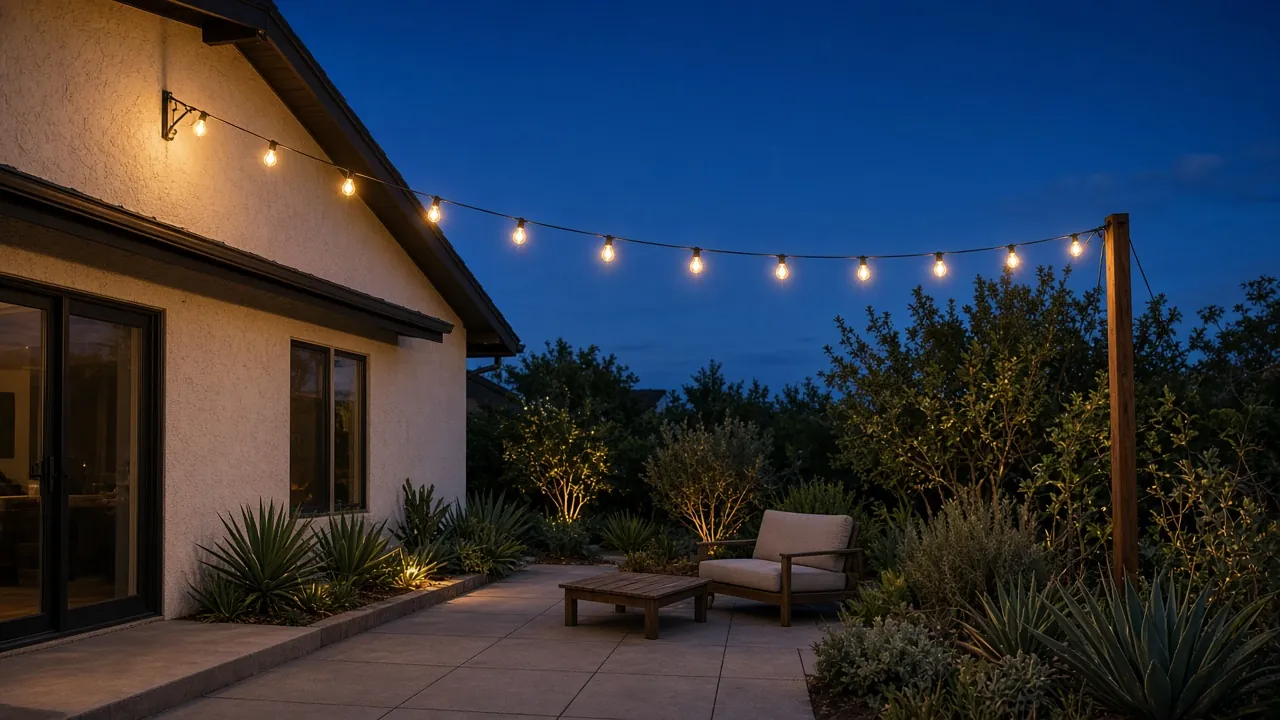
How to hang outdoor string lights so they don't sag
String lights sag when the electrical cord is doing the structural work. The sockets and copper wire between them are built to feed bulbs, not to act as a tension cable across a 25-foot patio. The clean fix I use on outdoor jobs is simple: tension a stainless steel guide wire first, then clip the lights to the cable so the steel takes the load.
I work construction in the Los Angeles area. A taut, slightly crowned guide wire will still look straight next August. A light cord stretched between two lightweight cup hooks will turn into a sagging clothesline after the first warm afternoon.
Product links on this page are affiliate links. If you buy through one, I may earn a commission at no extra cost to you. Read the affiliate disclosure.
Electrical safety
- Plug outdoor lights only into a GFCI-protected outdoor outlet. If you need a new outlet, that is licensed electrician work in most cities.
- Use outdoor-rated cords and fixtures. Never staple through a light cord or pinch it in a door or gate.
- Before you open an outlet or switch, shut the breaker off and confirm the power is off with a non-contact tester or a multimeter — after testing the tester on a known-live outlet.
This is the short list for this project. Read the full safety basics page for carbon monoxide, No-Burn days, GFCI and tester rules, and DigAlert 811.
Quick answer
Buy outdoor-rated LED string lights, plug them into a GFCI-protected outdoor outlet, and hang them from a vinyl-coated stainless steel guide cable with turnbuckles — never from the electrical cord itself. Anchor into real structure (studs, beams, or set posts), not stucco skin or thin fascia trim.
What you need before you climb a ladder
- Outdoor-rated LED string lights (wet-location rated, heavy 14- or 16-gauge cord, sockets with hanging loops). LED runs cooler and lets you link runs safely within the manufacturer’s wattage limit.
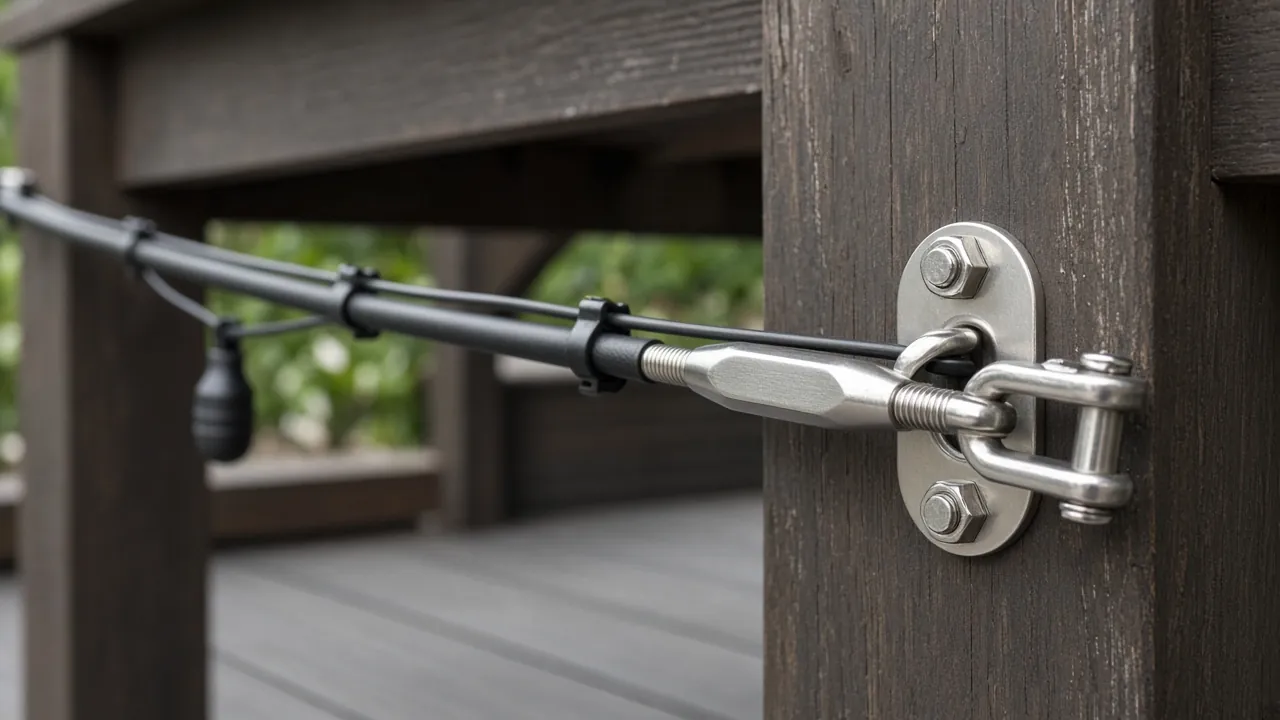
- Stainless steel guide-wire kit with coated 304 stainless cable, turnbuckles, clamps, and eye plates.
- Solid anchors: lag eye screws into wall studs or solid patio beams, masonry anchors in block walls, or a properly set post. A Franklin Sensors ProSensor 710 stud finder makes finding framing behind stucco or exterior siding much less guesswork.
- GFCI power & timer: plug into a working outdoor GFCI receptacle. Add a weatherproof TP-Link Tapo P400M outdoor smart plug if you want automatic dusk-to-bedtime scheduling.
Step-by-step hanging method
1 Measure the span and check GFCI power
Run a string line where the lights will hang and measure the total length back to a GFCI outdoor outlet. If the outlet is dead, missing a weatherproof cover, or needs a new box, stop and call a licensed electrician — never feed an indoor extension cord through a cracked door or window.
2 Anchor into real framing or masonry
Drive eye bolts or lag hooks into solid wood beams, rafters, or wall studs — never just into stucco plaster or 1/2-inch trim board. On block walls, use proper masonry sleeve anchors. On longer patio spans, add a center support or sturdy post so the middle does not bow — many hanging-kit instructions recommend a mid-span support on long runs rather than stretching one cable the full length of a large yard.
3 Tension the guide wire first
Leave the turnbuckle open partway, clamp both ends of the coated stainless cable cleanly, and tighten the turnbuckle until the line is firm. Leave just a slight natural curve — you are not trying to pull a patio post sideways.
4 Clip the lights to the cable
Attach each socket’s hanging loop (or every couple of feet of cord) to the guide wire with UV-rated zip ties or snap clips. Leave tiny slack between ties so the steel takes the pull, not the copper conductors. Never drive staples or nails through the cord.
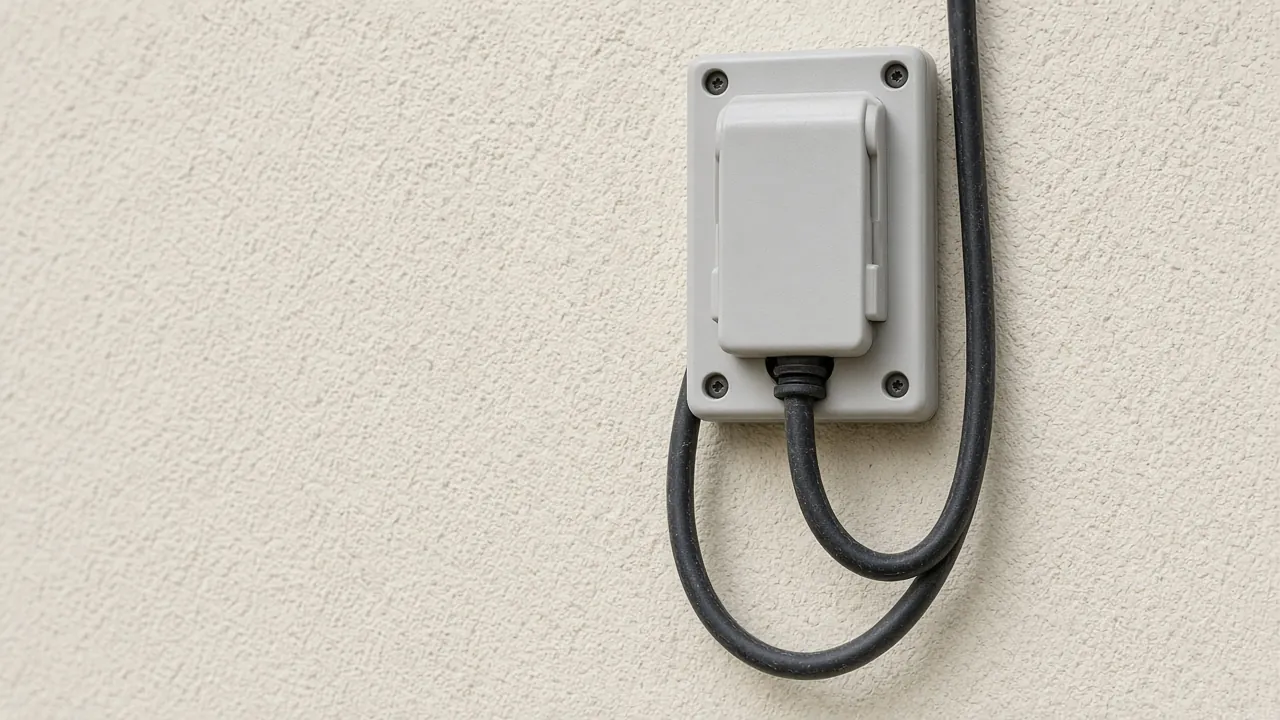
5 Leave a drip loop at the outlet
Route the cord so it dips below the GFCI receptacle before curving up into the plug. That drip loop keeps rain or morning dew from running down the cable straight into the outlet.
Common questions
- Can I attach a shade sail or string-light cable to roof fascia board?
- Light string-light cable with a gentle span can sometimes tie into solid rafter tails, never thin decorative trim. Heavy tension loads like long spans or shade sails belong on wall studs, structural beams, or concrete-set posts.
- Should I unscrew the bulbs while hanging?
- Yes, especially with glass bulbs. Hanging the cord and cable first without bulbs cuts weight and stops breakage if a line slips while you tension it.
- What if I have to cross near an overhead power line?
- Stop immediately. Stay well clear of overhead electrical service drops entering your house and call a licensed electrician or the utility if anything is close.
When to call a pro
Call a licensed electrician if you need a new GFCI outdoor outlet, an exterior switch, or any work inside a junction box. Call a licensed contractor or experienced handyman if you need a new structural post set in concrete for a long span. Stay away from overhead utility service lines.
These guides are general information. Follow the manufacturer’s instructions and local codes, and hire a licensed pro when in doubt. Read the full disclaimer.
As an Amazon Associate I earn from qualifying purchases. Affiliate disclosure.
Next step
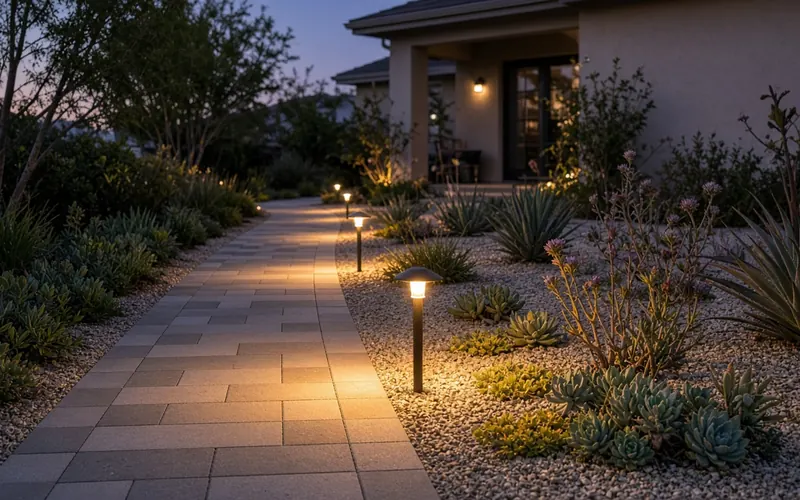
Our picks for outdoor solar and low-voltage path lights
Solar vs. 12-volt path lights for Southern California walks, including shade, transformers, and GFCI safety.
6 minute read
Our picks for patio heaters for a SoCal backyard
How to choose a patio heater for a Southern California yard, including propane vs. electric, clearances, and wind.
7 minute read