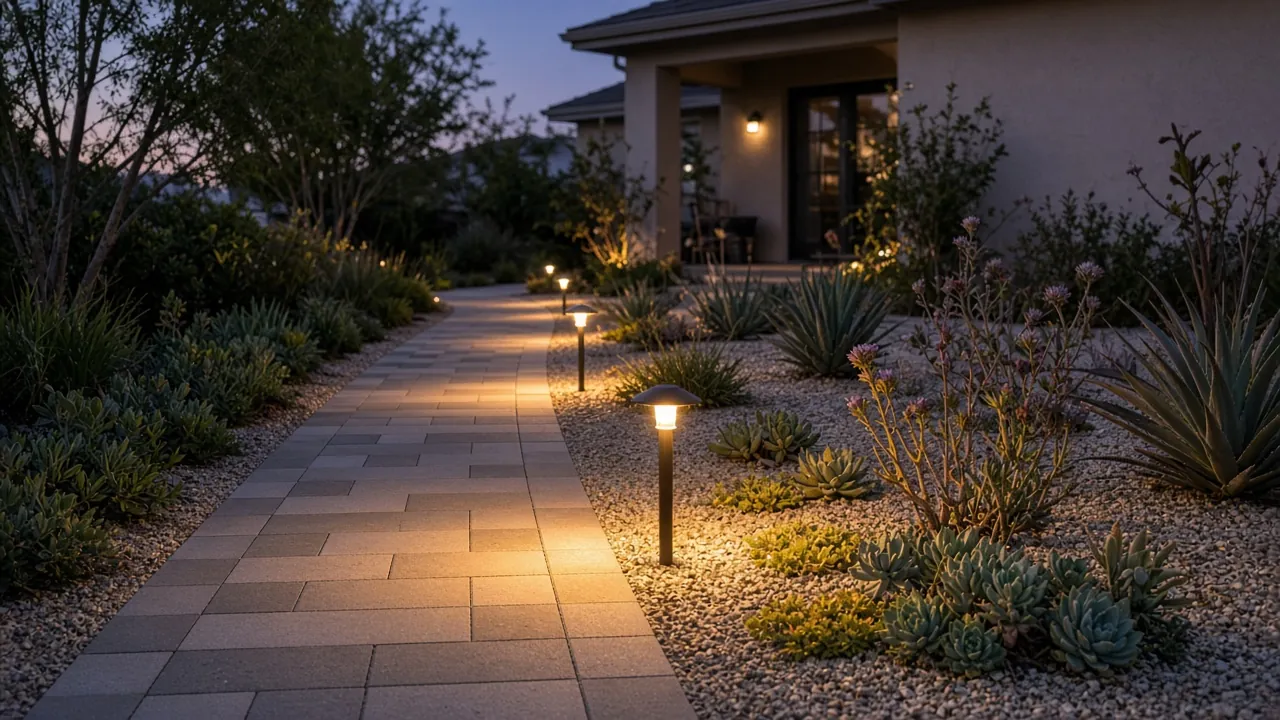
Our picks for outdoor solar and low-voltage path lights
Path lights do two practical jobs: they keep guests from tripping on an uneven flagstone or stepping off a front walk, and they give the yard a finished look after dark. In Southern California you can light a walk with solar stakes or with a 12-volt low-voltage cable and transformer. Both work, and they fail for completely different reasons.
I work construction in the Los Angeles area. Solar lights fail when homeowners put them under eaves, on a shaded north side yard, or under a big ficus or oak tree. Low-voltage lights fail when someone overloads a small transformer, leaves bare wire splices buried in wet mulch, or opens electrical boxes without confirming the power is off.
Product links on this page are affiliate links. If you buy through one, I may earn a commission at no extra cost to you. Read the affiliate disclosure.
Electrical and digging safety
- Plug the landscape-lighting transformer only into a covered GFCI-protected outdoor outlet, and use outdoor-rated cable and fixtures.
- Before you open an outlet or transformer, shut the breaker off and confirm the power is off with a tester (test the tester on a known-live outlet first).
- Call 811 / DigAlert at least two working days before you trench or dig, even for a shallow landscape-lighting slit.
This is the short list for this project. Read the full safety basics page for carbon monoxide, No-Burn days, GFCI and tester rules, and DigAlert 811.
Quick answer
If your walkway gets full open sun most of the day, solar stake lights are a quick, widely available option. If the path sits under trees or eaves — or you want consistent, even light all winter evening — a 12-volt low-voltage kit with a transformer, direct-burial cable, and matching fixtures is far more reliable. Plug the transformer into a covered GFCI outdoor outlet.
Solar vs. 12-volt low-voltage in SoCal
Solar path lights take five minutes to stake in, with no wire to trench. They work best on sunny, unshaded front walks. Under a porch overhang or dense coastal/valley trees, the panels never fully charge in December and fade out by 8 p.m. Dust and Santa Ana grit also cut panel output, so wipe the tops off occasionally and swap out tired rechargeable batteries after a year or two.
Low-voltage (12-volt) lights run from an outdoor transformer plugged into a GFCI outlet. Brightness stays steady regardless of shade or cloudy coastal mornings, and you can pair the transformer with a built-in photocell or an outdoor smart plug. Plan the run carefully so you do not nick sprinkler lines in the planting bed.
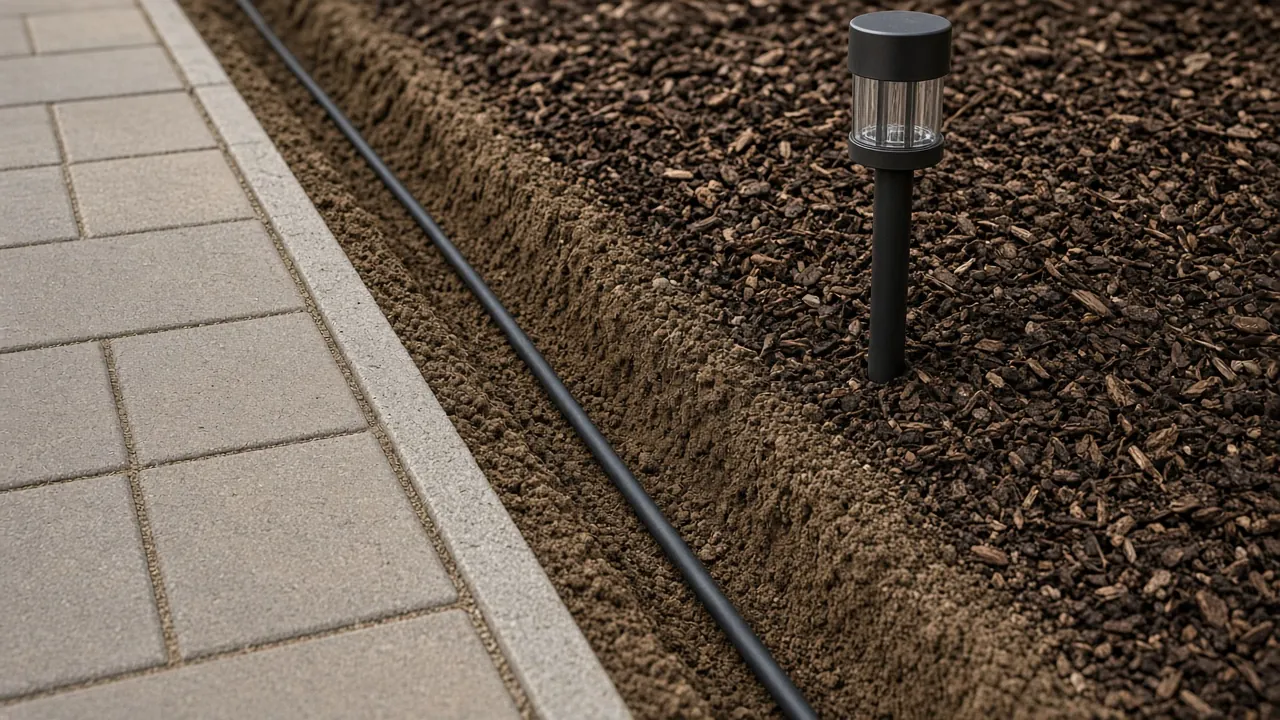
How to install a clean low-voltage run
1 Test spacing at dusk before digging
Set fixtures temporarily along the walk about 6 to 8 feet apart — closer on tight curves or steps. Stagger them on alternating sides rather than lining them up like an airport runway, and aim shields down so glare does not hit neighbors or drivers.
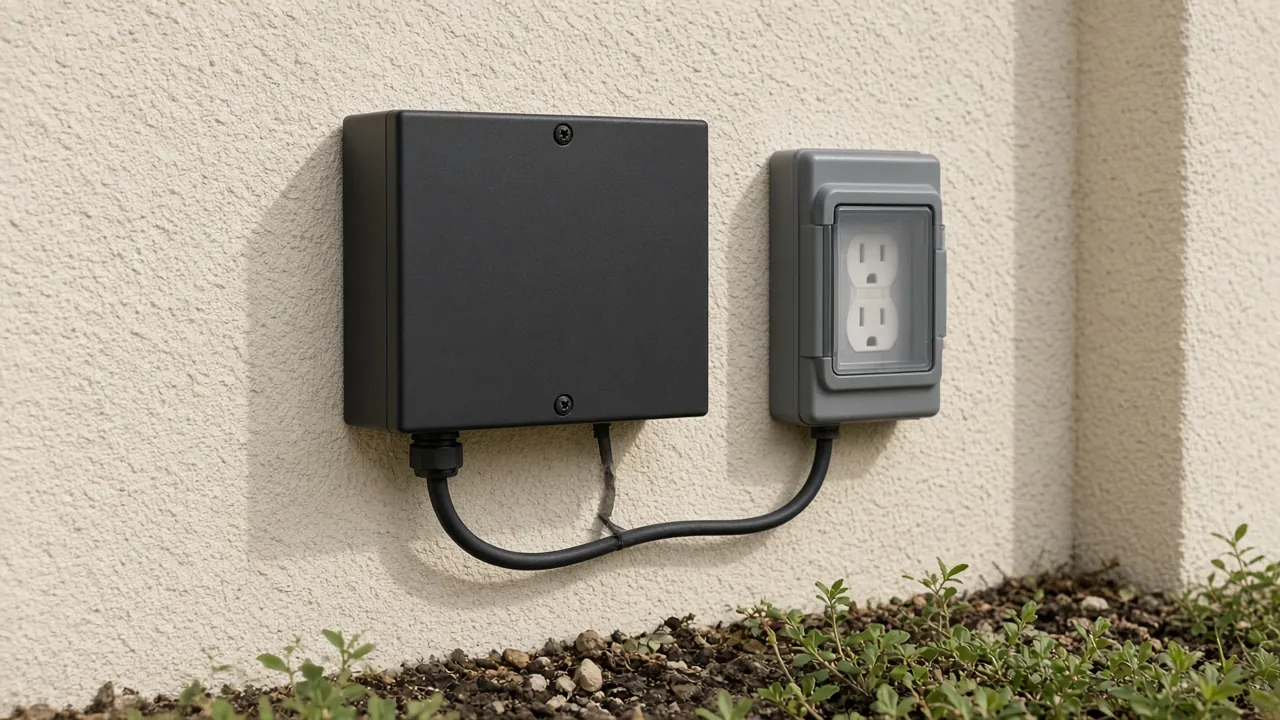
2 Mount the transformer off the ground at a GFCI outlet
Screw the transformer to a stucco wall or sturdy post at least a foot above soil or mulch, right next to a weatherproof covered GFCI outlet, and leave a drip loop in the cord. A common rule of thumb is to keep total fixture wattage well under the transformer’s rated capacity (often about 80 percent) so the unit does not run at its limit.
3 Confirm power is off before touching connections
Switch the breaker off and verify with a non-contact tester or multimeter (tested on a known-live outlet first) before opening an outlet cover or wiring transformer terminals.
4 Tuck cable safely and keep splices dry
Bury direct-burial low-voltage cable at the depth required by the electrical code your city has adopted and by the kit’s instructions — for many 30-volt-or-less landscape lighting cables, that minimum cover is typically 6 inches. Stay away from trimming edges and watch for existing PVC or poly irrigation lines. Use proper waterproof gel-filled connectors rather than bare electrical tape underground.
5 Walk the path at night
Restore power and inspect every light. If fixtures at the far end look noticeably dimmer, the run is too long for thin cable or overloaded — shorten the loop, use thicker 12/2 cable, or center-feed the run in a “T” layout.
Common questions
- Why do my far-end low-voltage path lights look dimmer than the ones near the house?
- Voltage drop. Either the wire gauge is too thin for the distance, too many halogen bulbs are on one run, or a loose splice is robbing power. LED fixtures and thicker cable fix most of it.
- Do I need 811 / DigAlert for a path-light trench?
- Yes if you are digging or trenching — even a shallow landscape-lighting slit can hit sprinkler pipes or a shallow telecom drop. Call 811 / DigAlert at least two working days before you dig. And do not stop at a 2- or 3-inch mulch cover: many low-voltage landscape lighting cables need about 6 inches of cover under the electrical code your city has adopted, unless the listed kit’s instructions and the code allow something different. Follow the stricter requirement.
When to call a pro
Call a licensed electrician to install a new outdoor GFCI outlet, fix a tripping breaker, or run 120-volt conduit across the yard. Hire a landscape lighting pro if you want wires bored cleanly under a concrete driveway or walkway.
These guides are general information. Follow the manufacturer’s instructions and local codes, and hire a licensed pro when in doubt. Read the full disclaimer.
As an Amazon Associate I earn from qualifying purchases. Affiliate disclosure.
Next step
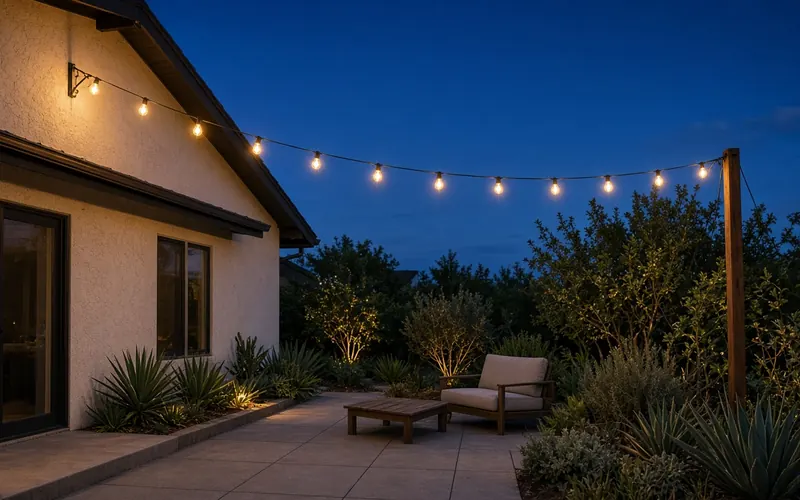
How to hang outdoor string lights so they don't sag
Hang outdoor string lights on a stainless steel guide wire so the cord never carries the span.
5 minute read
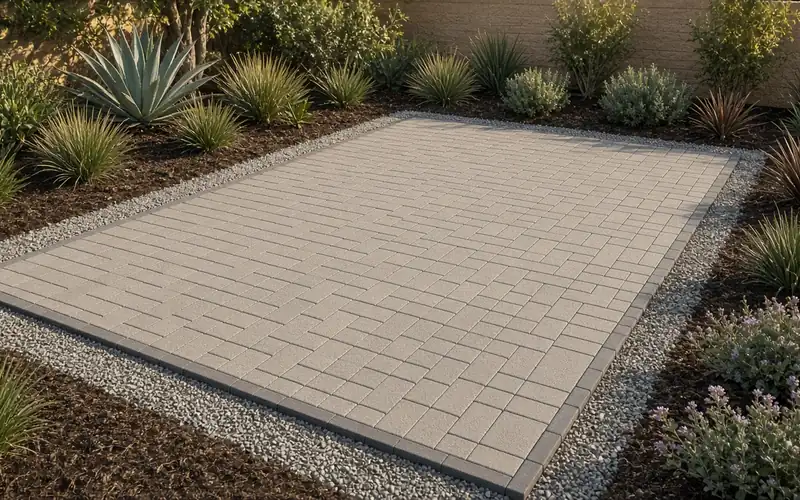
How to build a simple paver patio that stays flat
How to excavate, compact a base, and lay a simple paver patio that stays flat on Southern California clay.
6 minute read