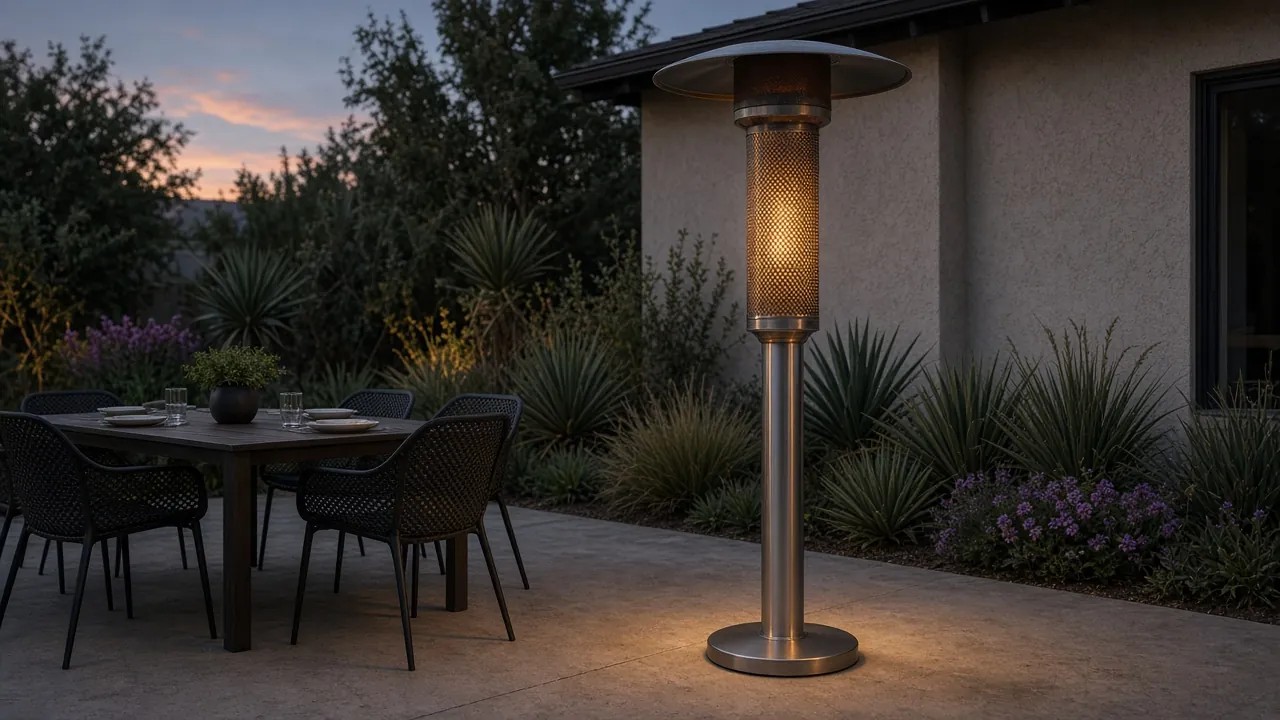
Our picks for patio heaters for a SoCal backyard
Southern California winters are mild, but a January evening on the patio can still send everyone inside. A patio heater is often the simplest way to keep a dining table or conversation area usable after dark — if you pick the right type for your space and treat it like the fuel-burning (or high-power electric) appliance it is.
I work construction in the Los Angeles area, and the mistakes I see are usually the same: a tall propane heater standing on an unweighted base in the wind, an indoor space heater dragged outside, or a unit tucked under a patio cover that does not have the clearance the label requires.
Product links on this page are affiliate links. If you buy through one, I may earn a commission at no extra cost to you. Read the affiliate disclosure.
Safety first
- Never use a patio heater, fire pit, or any fuel-burning appliance indoors, in a garage, in a tent, or on a poorly ventilated enclosed patio. Carbon monoxide can build up quickly and is deadly.
- Keep the clearance printed on the unit. Typical full-size propane patio heater manuals often list about 3 feet of overhead clearance and about 2 feet from combustible sides. Weight the base as the instructions say — wind tips tall heaters over.
- On red-flag days and during high Santa Ana winds, shut heaters down and skip open flames.
This is the short list for this project. Read the full safety basics page for carbon monoxide, No-Burn days, GFCI and tester rules, and DigAlert 811.
Quick answer
For a typical open backyard or patio, a full-size propane “mushroom” heater (around 46,000 BTU) is a solid, widely available option. For a balcony, condo patio, or a spot with a nearby outdoor GFCI outlet and no room for a 20-pound tank, an outdoor-rated electric infrared heater is usually the better fit. Skip indoor space heaters outdoors, and do not run any heater in an enclosed space.
Propane, electric, or natural gas?
Propane is the most common choice for a detached house. A full-size patio heater sits on a 20-pound tank, lights with a push-button igniter, and throws a wide circle of heat — often advertised around a 9-foot radius, with the real comfort zone closer to the unit. You can roll it away when you do not need it. The tradeoffs are the tank, the weight of the base, and the wind. Santa Ana gusts will rock a tall heater if the base is not weighted.
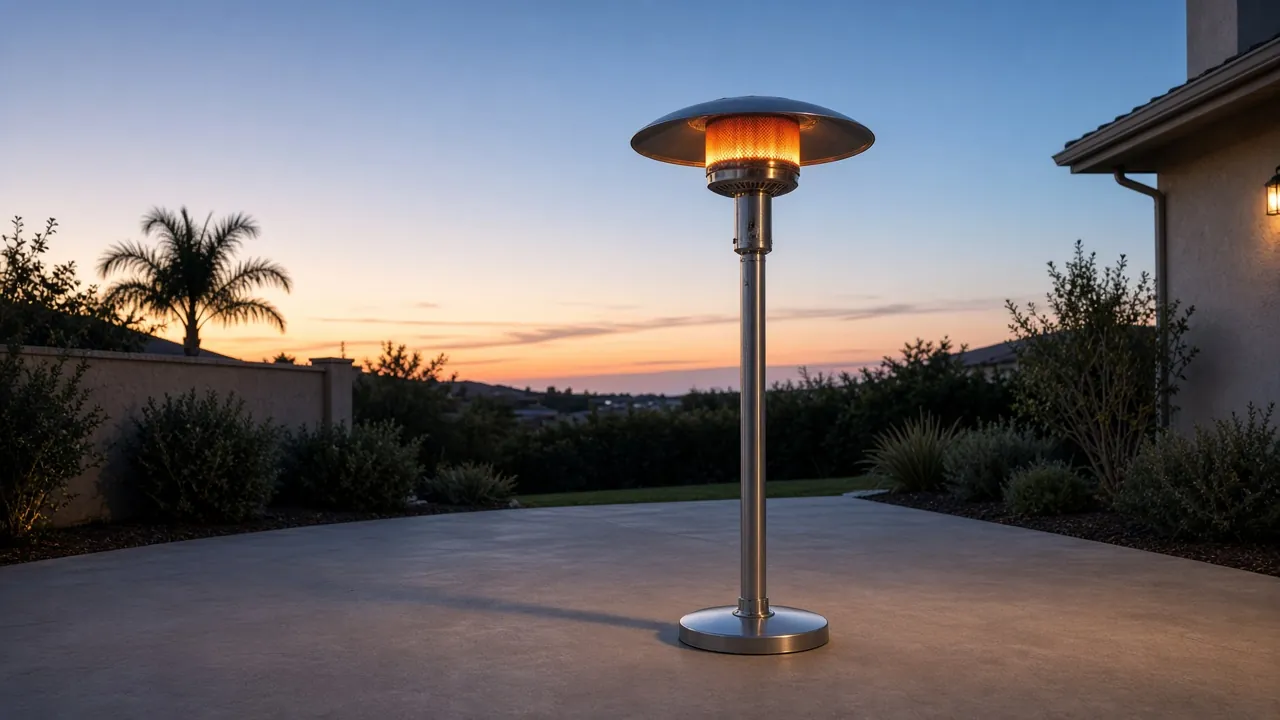
Electric infrared makes more sense on a balcony, a small side yard, or anywhere a propane tank is not allowed. Look for a heater that is specifically rated for outdoor or indoor/outdoor use. A 1,500-watt unit on a standard 120-volt circuit warms the people directly in front of it rather than the whole yard. Plug it into a GFCI-protected outdoor outlet. Plug-in infrared heaters run on a standard 120-volt outlet, while higher-output hardwired outdoor infrared heaters often need a dedicated 240-volt circuit installed by a licensed electrician. Do not use an ordinary indoor space heater outside.
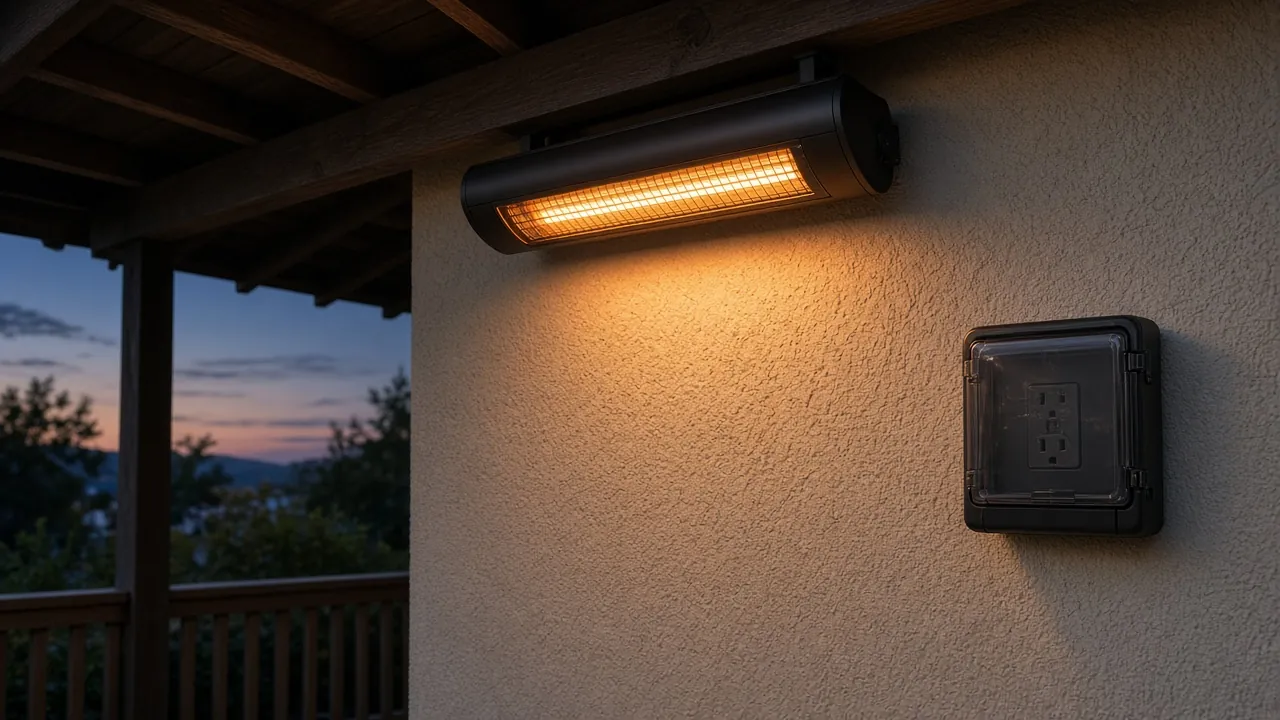
Natural-gas patio heaters and permanently mounted infrared units are the “set it and forget it” option for a built-in outdoor kitchen or a covered patio designed for them. The gas hookup and, for hardwired electric, the circuit, should be done by a licensed pro.
What matters in a SoCal yard
- Wind. A heater that works on a still night can tip or blow out in a Santa Ana. Weight the base, use the wheels only to move it, and shut it down in high wind.
- Overhead clearance. Many SoCal patios have a low cover, a pergola, or an umbrella. Read the rating plate. If the heater cannot sit with the listed clearance under the roof or fabric, it does not belong there.
- Neighbors and rules. Apartments, condos, and some HOAs restrict propane tanks or open-flame devices. Check before you buy.
- Surface. Level concrete or pavers are ideal. A wood deck needs the clearances and heat shielding the manufacturer calls for; if the manual is silent or the deck is old and dry, put the heater elsewhere.
How to set one up
1 Pick the spot in daylight
Stand where people will sit and look up and around. You need the manufacturer’s clearance from walls, eaves, fabric, and plants. Leave a walking path so no one brushes past a hot mast or reflector.
2 Assemble and weight the base
Follow the instructions. Most propane heaters have a tank housing and a base reservoir you fill with water or sand for ballast. Do not skip that step. Chock or orient the wheels so it cannot roll.
3 Connect the tank outdoors
With the valve off, connect a full 20-pound propane tank as the manual shows and check the connection with soapy water. Bubbles mean a leak — shut the valve and fix it before lighting. Store spare tanks upright, outdoors, away from heat.
4 Light it and stay with it
Use the built-in igniter. If it does not light, wait, then follow the manual’s restart steps — do not keep feeding fuel into an unlit burner. Never leave a running heater unattended, and shut it off if wind comes up.
5 Cool down, then cover it
Turn the tank valve off and let the reflector and burner screen cool completely before putting a cover on. Dust and spider webs in a burner tube are the main reason heaters fail to light the next winter.
Common questions
- Can I put a tall propane patio heater under a wood pergola or patio cover?
- Only if you still meet every overhead and side clearance printed on the heater’s rating label — and most low residential patio covers do not have enough height. When overhead space is tight, a listed outdoor electric infrared heater (mounted per its manual) is usually the safer choice.
- Do South Coast AQMD No-Burn Days apply to propane patio heaters?
- Check Before You Burn targets residential wood burning, not propane heaters. Still, red-flag wind warnings, HOA rules, and local fire restrictions can apply to open-flame or portable fuel appliances.
- Can I run an outdoor electric heater on a household extension cord?
- Avoid thin indoor cords. Plug directly into a GFCI outdoor outlet if possible, or use a heavy-duty 12-gauge (12/3) outdoor-rated extension cord sized for the heater’s amperage and kept off wet ground.
When to call a pro
Call a licensed plumber or HVAC tech for a permanent natural-gas hookup. Call a licensed electrician for a new GFCI outdoor outlet, dedicated circuit, or hardwired infrared heater. If you smell gas and cannot find an obvious loose fitting with soapy water, shut the valve, move away from the unit, and call for help.
These guides are general information. Follow the manufacturer’s instructions and local codes, and hire a licensed pro when in doubt. Read the full disclaimer.
As an Amazon Associate I earn from qualifying purchases. Affiliate disclosure.
Next step
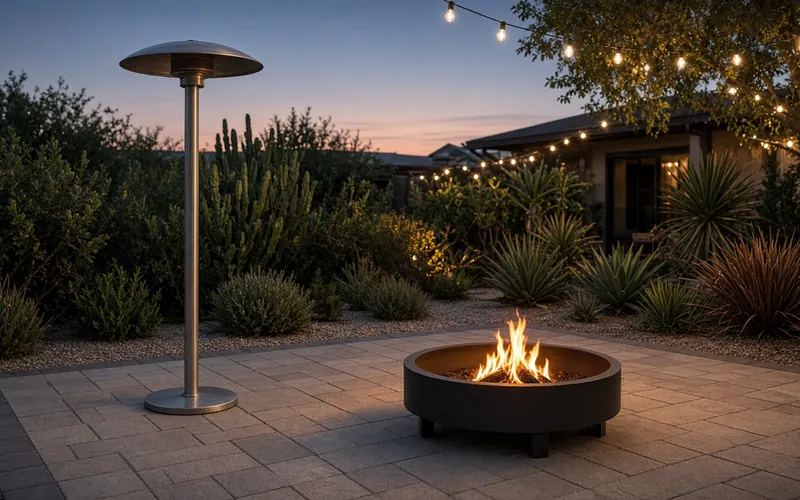
Fire pit vs. patio heater: which one is worth it?
A practical comparison of fire pits and patio heaters for Southern California yards, including wind, burn rules, and clearances.
6 minute read
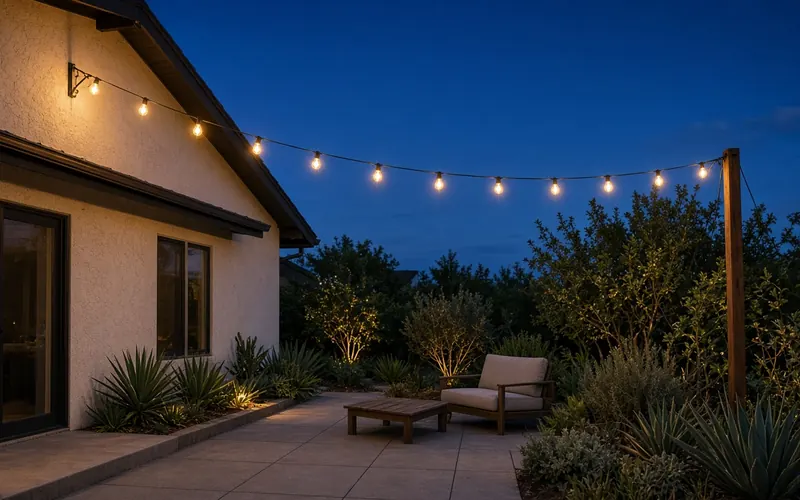
How to hang outdoor string lights so they don't sag
Hang outdoor string lights on a stainless steel guide wire so the cord never carries the span.
5 minute read