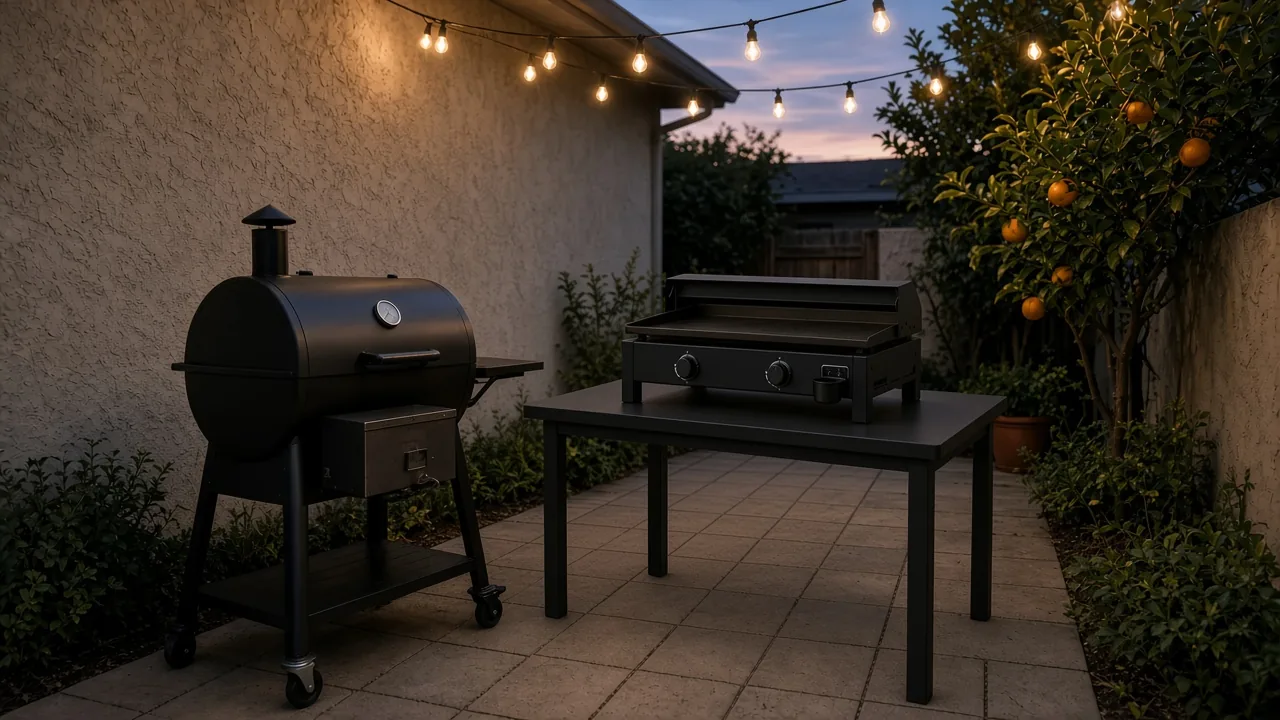
Our picks for pellet grills and griddles for a small SoCal yard
A lot of Los Angeles patios and townhome yards do not have room for a 6-foot built-in island. You want real outdoor cooking — smashburgers, carne asada, or slow weekend ribs — without backing a blazing firebox up against stucco eaves, a neighbor’s wood fence, or a patio umbrella.
I work construction in the LA area, and tight yards are where grill clearance and electrical habits matter most. Compact tabletop griddles, mid-size pellet grills, and electric woodfire units all work great in small footprints — as long as you keep open air above them and plug electric units into a proper GFCI outdoor outlet.
Product links on this page are affiliate links. If you buy through one, I may earn a commission at no extra cost to you. Read the affiliate disclosure.
Safety first
- Never use a grill, pellet smoker, or griddle indoors, in a garage, or under a low enclosed patio cover. Carbon monoxide and grease fires are the risk.
- Plug pellet grills and electric woodfire cookers only into a GFCI-protected outdoor outlet, and use a heavy-duty 12-gauge (12/3) outdoor-rated extension cord if you need reach.
- Skip cooking on red-flag wind days. South Coast AQMD’s No-Burn rules aren’t clear-cut for pellet grills; check current Check Before You Burn guidance before using one on a declared No-Burn day.
This is the short list for this project. Read the full safety basics page for carbon monoxide, No-Burn days, GFCI and tester rules, and DigAlert 811.
Quick answer
For quick weeknight tacos, smashburgers, and fajitas on a tight patio, a 22-inch tabletop propane griddle is tough to beat and leaves zero wood smoke. For weekend brisket or ribs in a small yard, pick a compact pellet grill (around 450 sq in) or a portable electric woodfire grill plugged into a GFCI outdoor outlet. Never run any grill, smoker, or griddle under an enclosed patio cover or inside a garage.
Propane griddle vs. compact pellet grill vs. electric woodfire
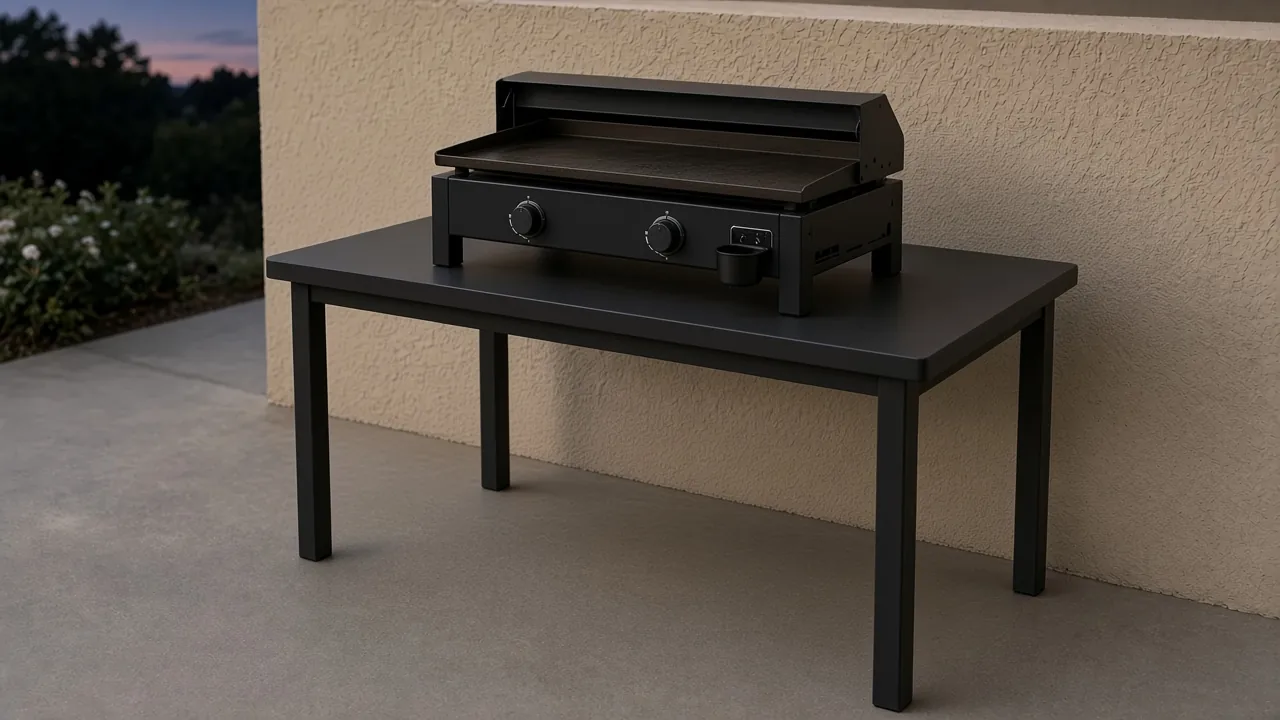
Tabletop propane griddles (22-inch): Great for small patios where you do not want lingering wood smoke drifting into open neighbor windows. A flat steel plate heats fast, hooks to a 1-lb bottle or 20-lb tank with an adapter hose, and stores cleanly once cool. Watch grease traps carefully and keep the back away from vinyl siding or wood fences.
Compact pellet grills: Burn compressed hardwood pellets for steady smoke and set-and-forget temperature control. Keep in mind that pellet grills are electric appliances with a firepot — they need a nearby GFCI outdoor outlet (or a heavy-duty 12-gauge (12/3) outdoor-rated extension cord), dry pellet storage so pellets do not swell into sawdust concrete, and clean grease trays so drippings never flare up.
Compact electric woodfire grills: Use an electric heating element plus a small scoop of wood pellets for smoke flavor. Helpful on smaller patios or spots where a full pellet hopper or big propane tank is cramped, though HOA and apartment grill rules still dictate where any outdoor cooker can run.
Small-yard safety and clearances
- No overhangs or enclosed rooms. Never cook with propane, charcoal, or wood pellets inside a garage, carport, sunroom, or under a low wood roof. Heat and carbon monoxide build fast, and grease smoke stains eaves and soffits.
- Mind Santa Ana gusts and No-Burn days. High wind can blow out a low propane griddle flame or kick sparks out of a firepot. Skip outdoor cooking on red-flag wind days. South Coast AQMD’s No-Burn rules aren’t clear-cut for pellet grills; check current Check Before You Burn guidance before using one on a declared No-Burn day. Propane griddles and fully electric cookers are a different category.
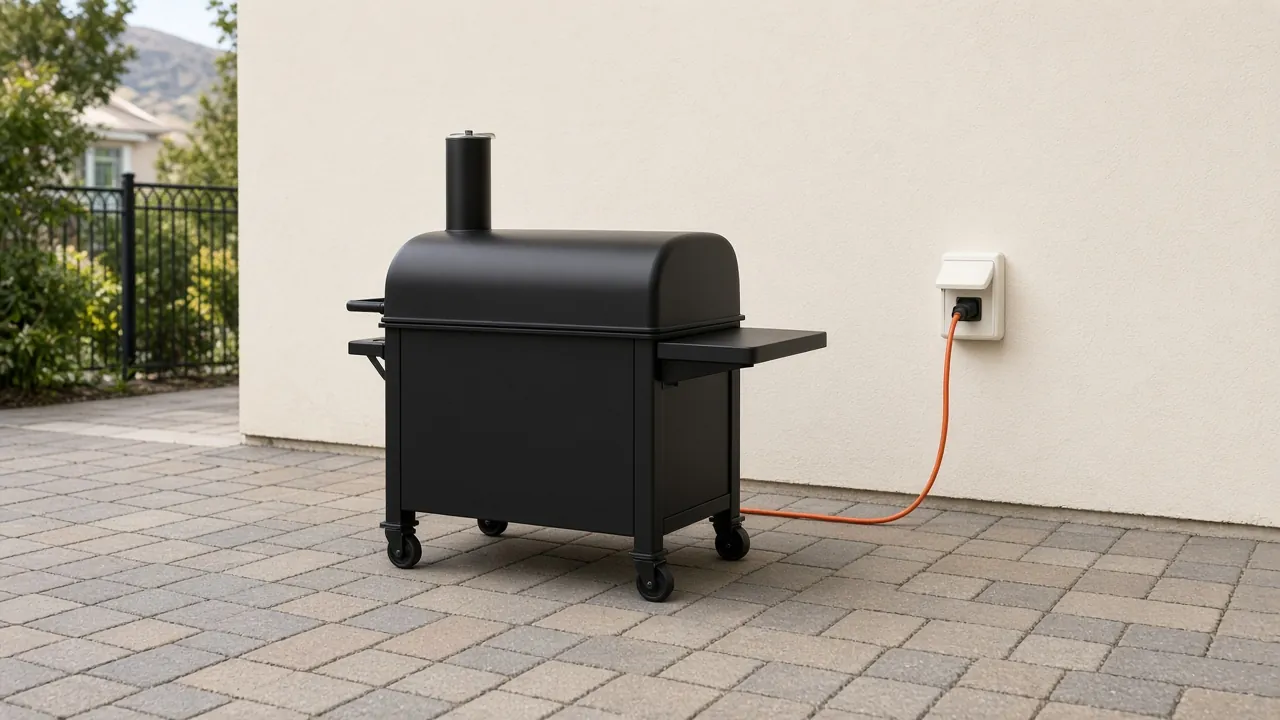
- GFCI & heavy cords only. Plug pellet grills and electric woodfire cookers into a working outdoor GFCI receptacle. If you need reach, use a short heavy-duty 12-gauge (12/3) outdoor-rated extension cord — never a thin indoor cord.
- Keep off artificial turf and dry decks. Grease drips and radiant bottom heat will melt synthetic grass and scorch dry wood.
Setting up a safe small-yard cooking station
1 Measure clearances in open air
Read the manual’s minimum back, side, and overhead clearances before placing the grill or griddle. Leave enough open sky above that rising heat and smoke cannot hit eaves, shade sails, or dry tree limbs.
2 Level the surface
Griddles especially need to sit level so cooking oil does not run into one corner. Set a tabletop griddle on a sturdy, level table. If a pellet grill has casters, lock them on level concrete or pavers.
3 Leak-test propane or verify GFCI
Spray soapy water on new propane fittings and check for bubbles. For pellet or electric units, press the outdoor GFCI “Test” and “Reset” buttons before plugging in.
4 Keep grease trays and firepots clean
Empty griddle grease cups and vacuum pellet ash out of the firepot regularly. Most backyard grill fires come from old grease, not the burner itself.
Common questions
- Can I put a pellet grill or tabletop griddle on a covered patio?
- Usually not safely under a solid wood or vinyl roof unless the manufacturer explicitly clears overhead installations with proper ventilation/hoods. Standard residential patio covers trap carbon monoxide, heat, and grease smoke.
- Do I need a 20-lb propane tank for a 22-inch griddle?
- They run out of the box on 1-lb camping cylinders, or on a standard 20-lb BBQ tank if you add a listed adapter hose — which saves constant small-bottle swaps if you cook often.
When to call a pro
Hire a licensed plumber if you want a permanent natural-gas quick-disconnect stubbed onto your patio wall, and a licensed electrician if you need a new outdoor GFCI receptacle near your cooking spot.
These guides are general information. Follow the manufacturer’s instructions and local codes, and hire a licensed pro when in doubt. Read the full disclaimer.
As an Amazon Associate I earn from qualifying purchases. Affiliate disclosure.
Next step
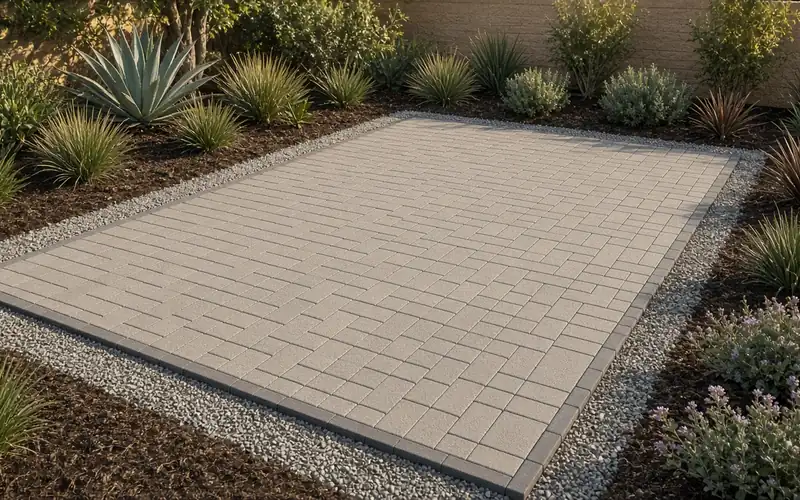
How to build a simple paver patio that stays flat
How to excavate, compact a base, and lay a simple paver patio that stays flat on Southern California clay.
6 minute read
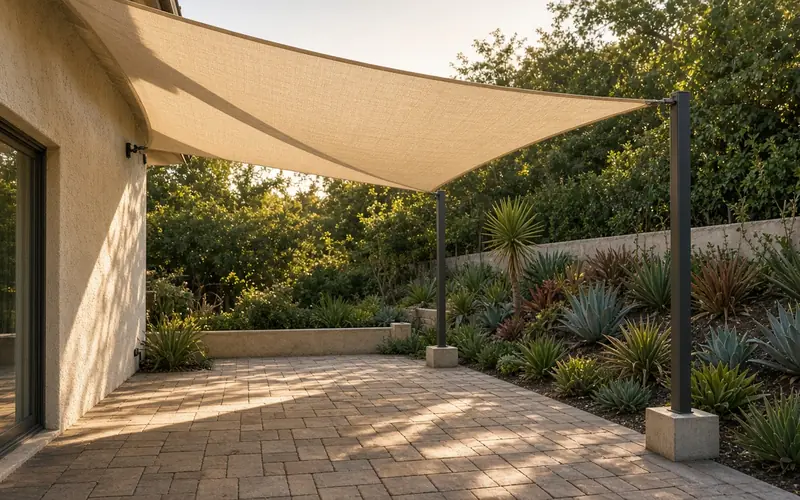
How to install a shade sail that survives Santa Ana winds
How to mount a shade sail in Southern California, including posts, anchors, tension, wind, and 811 safety.
6 minute read